How to Build a Safer Office Environment

Workplace safety is not just a manufacturing or construction concern — it is equally relevant in an office environment. Slips, trips, falls, ergonomic injuries, and the cumulative effects of a poorly designed workspace contribute significantly to Australia’s workplace injury statistics every year, and most of these incidents are entirely preventable.
Why office safety deserves serious attention
The assumption that offices are inherently safe environments tends to create complacency. In reality, the combination of hard flooring, power cables, cluttered workstations, inadequate lighting, and extended periods of sedentary work creates a range of injury risks that affect employees across every industry with an office-based component.
Under Australian workplace health and safety legislation, employers have a duty of care to ensure the work environment is safe and without risk to health as far as is reasonably practicable. This obligation covers physical safety as well as psychosocial hazards, including excessive workload, harassment, and poorly managed workplace stress.
Regular workplace risk assessments are a practical starting point. Conducted properly, they identify hazards before they cause harm and create a documented record that the employer has taken reasonable steps. A systematic walk-through with a simple checklist covers most common office hazards effectively and does not need to be complicated.
Managing slip and trip hazards
Slips and trips are among the most common causes of office injury, and they occur in predictable locations. High-traffic corridors, entry points that become wet in poor weather, polished floor surfaces, and spaces with unmanaged cables or uneven surfaces are all elevated risk zones that warrant specific attention and practical intervention.
Quality office safety mats reduce slip risk considerably, particularly in areas where hard flooring and regular foot traffic create a persistent hazard. Anti-fatigue matting also plays an important role at standing workstations, reducing the muscular strain that accumulates for employees who spend extended periods on their feet throughout the working day.
Cable management is a frequently overlooked but important element of office safety. Power cables running across walkways or gathering under desks in an uncontrolled way present both a trip hazard and a fire risk. Desk grommets, cable trays, and adhesive clips are inexpensive solutions that make a meaningful and lasting difference.
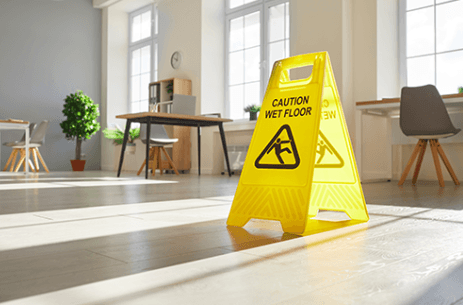
Entry areas deserve particular attention during wet weather, which is common across much of Australia for several months each year. Non-slip entrance matting, clear wet floor signage, and prompt response to any wet surfaces are standard measures that significantly reduce the risk of a slip injury occurring at the building threshold.
Ergonomics and the sedentary office
Ergonomic injuries are the most common category of workplace harm in office environments, and they develop gradually rather than from a single incident. Poor workstation setup — a screen positioned too low, a chair lacking adequate lumbar support, or a keyboard at the wrong height — creates cumulative strain on muscles, joints, and tendons over time.
A properly configured workstation positions the screen at eye level at roughly arm’s length from the user. The chair should support the spine’s natural curve, with feet flat on the floor or resting on a footrest. Elbows should sit at approximately desk height when the hands are resting on the keyboard in a natural position.
Regular movement breaks are important for anyone spending extended periods seated. Even brief interruptions to sedentary time reduce the health risks associated with prolonged sitting and help maintain concentration and energy across the day. Standing desks and timed movement reminders are both practical and increasingly affordable options.
Workplace culture has evolved considerably in recent years, with many Australian offices adopting relaxed dress codes influenced by the growing crossover between casualwear and professional attire. The rise of designer streetwear brands in everyday wardrobes has led some safety-conscious employers to revisit footwear standards, particularly where flooring surfaces require adequate sole grip.
Lighting, air quality, and the indoor environment
Adequate lighting is essential for both safety and productivity. Poor lighting contributes to eye strain, headaches, and reduced concentration, as well as creating shadows and glare that can obscure trip hazards. A combination of general ambient lighting and task-specific desk lighting typically produces the best result for most office layouts.
Natural light is beneficial wherever it can be achieved. Its positive effect on mood, energy, and cognitive performance is well documented, and positions near windows are consistently rated more favourably by employees. Managing glare through blinds or screen filters allows natural light to be used effectively without creating a source of visual discomfort.
Air quality in office environments is frequently underestimated as a workplace issue. Poor ventilation leads to increasing concentrations of carbon dioxide that affect cognitive function even at levels well below any regulatory threshold. Regular HVAC maintenance and adequate fresh air circulation both contribute to a healthier and more productive indoor environment.
Temperature and humidity also affect comfort and performance. Offices that are too warm, too cool, or excessively dry create conditions that reduce concentration and increase the likelihood of fatigue and illness. Giving employees some control over their immediate environment, where practical, consistently improves satisfaction and reduces disruption.
See also: Why Women in Leadership Programs Make Business Sense
Building a culture of safety
Safe workplaces are built through culture as well as through physical measures. When safety is discussed openly, reported incidents are taken seriously, and near-misses are treated as learning opportunities rather than sources of blame, employees feel confident raising concerns before they result in actual injury. Psychological safety supports physical safety.
Management behaviour sets the tone for the whole organisation. When leaders visibly maintain their own safety habits — keeping workspaces tidy, reporting hazards promptly, following the same procedures expected of staff — it sends a clear signal that safety standards apply to everyone regardless of seniority or role.
Safety training should be included in induction for all new employees and refreshed regularly for existing staff. A brief annual walkthrough of office hazards and emergency procedures, combined with clear communication about how to report concerns, covers the essentials for most office environments without placing excessive demands on anyone’s time.
A safer office is both a legal obligation and a genuine competitive advantage. Organisations that treat it as a priority consistently experience fewer disruptions, lower workers’ compensation costs, and higher levels of employee satisfaction. Investing in it regularly — rather than only after an incident occurs — is always the most effective approach.